

–      Europe’s fleet sustainability dips for the first time, marking a notable shift

–      Regulatory uncertainty affects 60% of fleet managers’ operations

–      CO₂ tracking at a three-year low; only 25% aware of digital tools

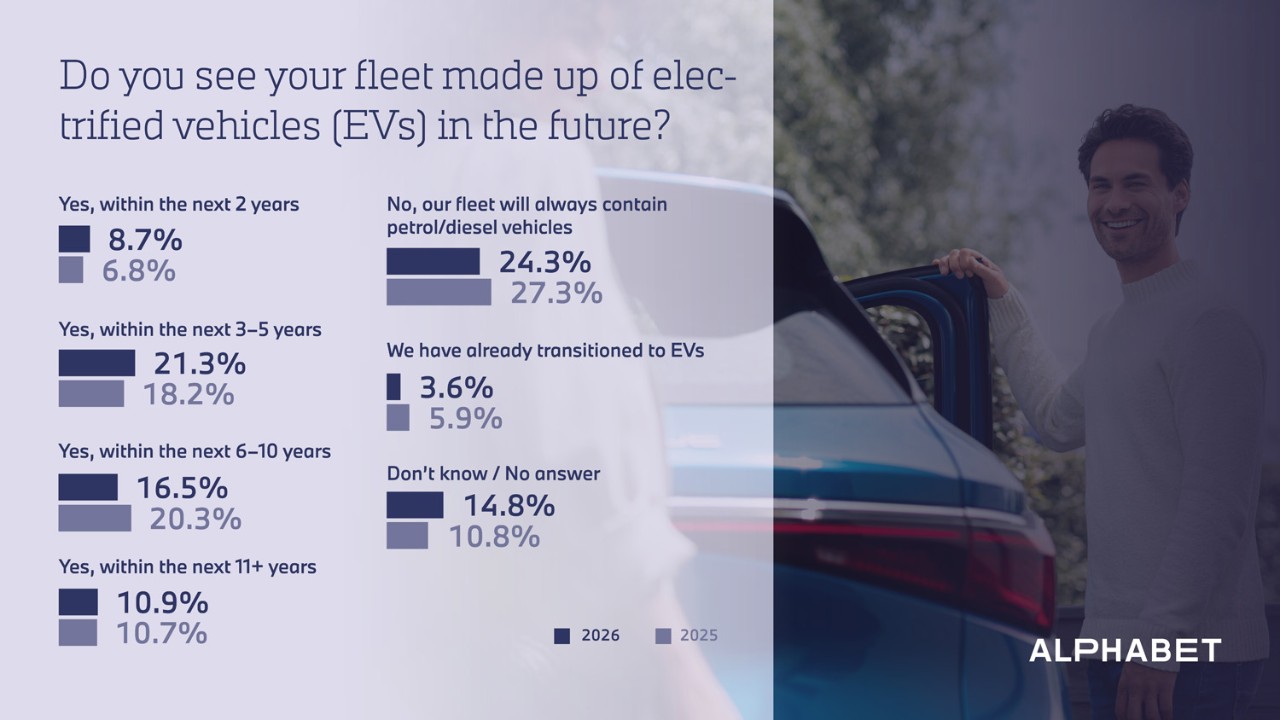
–      However, 61% of fleets are preparing for full electrification or have already made the switch

MUNICH, 13/05/2026 – For four years, Alphabet’s European Fleet Emission Monitor (EFEM) has tracked steady progress in fleet sustainability across Europe. But in 2026, that progress stalled – and even reversed. Drawing on insights from over 630 fleet managers across 12 countries, surveyed early this year, the report reveals a striking first: key sustainability metrics have dropped for the first time since EFEM’s inception. This setback isn’t due to a lack of ambition, but rather the impact of unclear regulations, which has led many decision-makers to hit pause rather than push forward.


EFEM results 2026


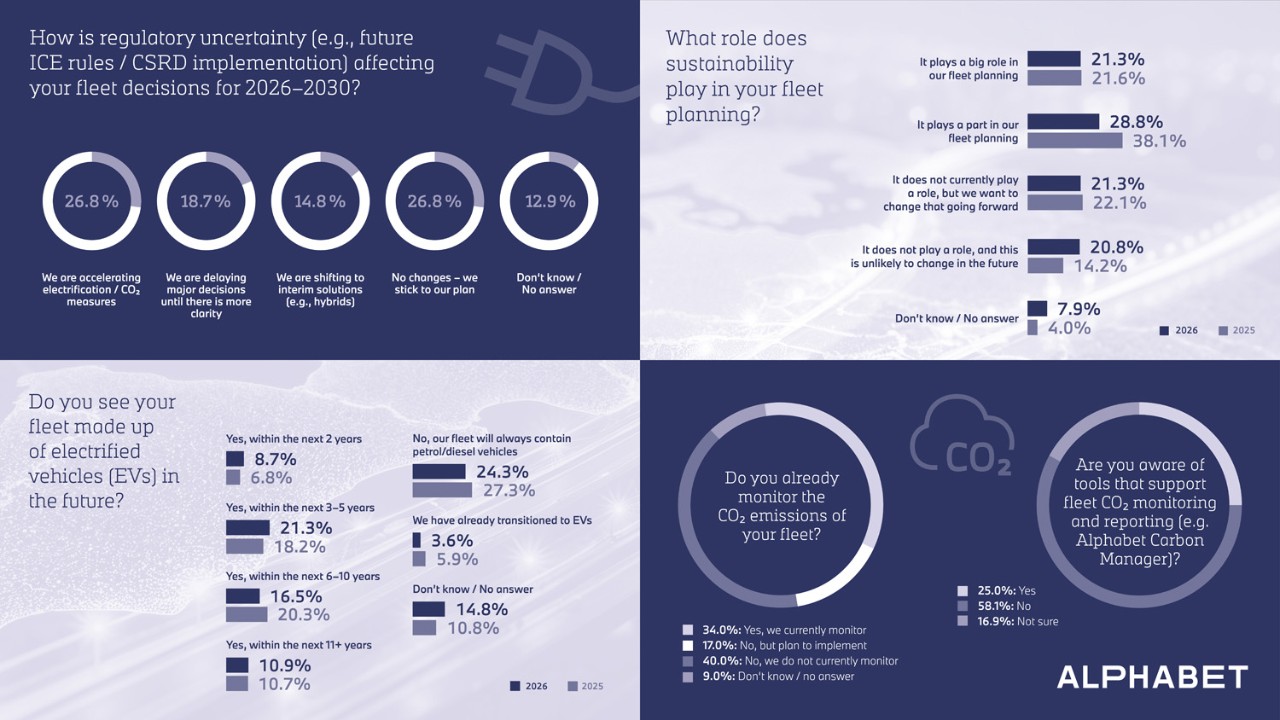
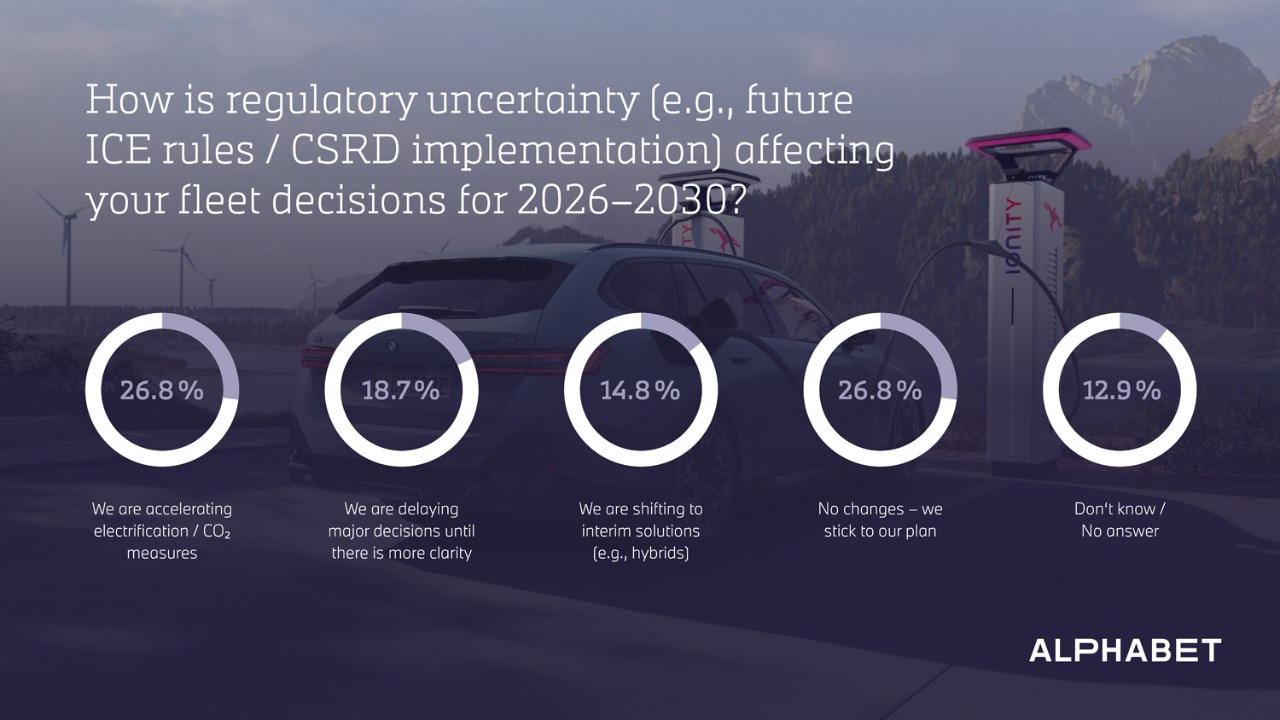
The 2026 survey adds a crucial new question that gets to the heart of this year’s surprising shift: how is regulatory uncertainty shaping fleet decisions? The picture that emerges is one of a market pulled in three directions. While 27% of the respondents are pushing ahead with electrification and CO₂ reduction, 19% are holding back, waiting for clearer regulations. Meanwhile, 15% are opting for interim solutions like hybrids. This split creates a fragmented market, where the shared goal of sustainable, future-ready fleets is being pursued at very different paces – and with varying degrees of confidence.


EFEM results 2026


Monitoring in reverse: visibility falls as tool awareness lags


The most striking headline figure from the latest findings is the sharp decline in CO₂ monitoring. Only 34% of European companies now track their fleet emissions – a drop of 9.3 percentage points in just one year and the lowest level since the study began. Even more noticeable, only one in four fleet managers are aware of digital tools like the Alphabet Carbon Manager that can simplify emissions tracking. This leaves many without a clear way forward. Meanwhile, digital engagement is slipping, with 32% unable to identify any digitalisation challenges at all. Yet, there is a silver lining: AI adoption is quietly gaining ground, with 11% now reporting some level of integration, up from 7% in 2025.


Fleet sustainability slips as polarisation widens

The wider sustainability outlook is also slipping. Only half of European companies now factor sustainability into their fleet planning – the lowest level since the study began and down from 60% in 2023. Even more concerning is a growing divide: 14% of fleet managers say sustainability is not important at all, up 2.4 points since last year. Awareness of subsidies for fleet electrification has also dropped sharply, with just 47% aware of available financial support. And nearly half of the respondents feel insufficiently informed about e-mobility options. After all, even the best policies fall short if those they aim to support don’t know they exist.


EFEM results 2026


Electrification holds, but unlocking it demands a holistic approach

Despite setbacks across most areas, 61% of European fleet professionals expect their fleets to be fully electric or have already made the switch. This steady commitment stands out amid the broader challenges. Yet progress remains hampered by a mix of equally significant hurdles – from operational complexity and budget limits to employee acceptance. With no single barrier taking precedence, it’s clear that overcoming these issues requires a coordinated, systemic approach.


Jesper Lyndberg, CEO of Alphabet International, reflects on the findings: “This year’s survey shows that the will to act remains strong – but the confidence to do so has weakened. Regulatory uncertainty is now the biggest factor influencing fleet decisions across Europe, driving responses that range from bold acceleration to cautious hesitation. The organisations that will succeed are those that stop waiting for clarity and start building the right foundations today – with accurate data, effective tools, and solid structures. True clarity doesn’t come from outside – it’s something you build yourself.”


EFEM results 2026